Thursday, 28 February 2013

Game Design: From Pong to Next Gen

Game design references the dynamics and mechanics of a game, whether that game be a board game, card game, video game or sport. The dynamics and mechanics are often the reason people play games and what they base their overall opinion of the game on. After looking into game design it is easy to see the different mechanics aren’t only present in video games, but even things such as twitch games ( one of my personal favourite styles of PC game, where the speed of play and the reaction speed is at the heart of the game) are present in card games such as Snap. This was very surprising as I hadn’t really considered comparing the dynamics of tabletop and physical games with the dynamics of video games.

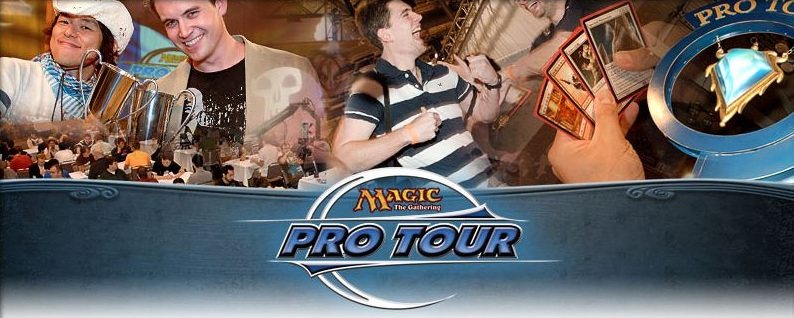
This adds even more strength to my love of Magic: The Gathering, as a card game what I hadn’t realised about it is that it can incorporate almost every different gameplay mechanic within the same game. You choose how you build your deck and how you want to play the game; playing against others using different play styles. This makes the game even more dynamic as variety, preparation and skill pay off, tactics and play styles are incredibly different across the board of players. This realisation also adds to my arguments that esports and card games should have a similar status to that of football and other such sports (esports are essentially video games played in a competitive way with tournaments, pro players and world cups similar to physical sports).

Image found here.

Playing a great deal more Magic: The Gathering than video games nowadays I have reached the realisation that the game design between video games and tabletop games of any kind is incredibly similar. However there are a couple of things that differ immersion and company being the primary examples that I can come up with.

Immersion is often considered the defining feature of video games; graphics, realism, senses are continually being used as the selling points for new games. Often these new games are using an archetypal game design which has been around for years and years. This barrage on the senses, often beautiful and incredibly well put together, can’t be compared to tabletop games which offer a similar depth of immersion but not necessarily the same style of immersion. Where video games offer sensory immersion many tabletop games offer a more cerebral immersion. I find that I play Magic competitively and I’m completely immersed in what the other person may be thinking and playing in order to better prepare myself and plan my reaction. Along with the difference in immersion styles the two styles of games which are so closely linked in terms of game design have differences in that tabletop games are almost entirely multiplayer with the requirement of knowing others who share the same idea where video games don’t require anyone but yourself and sometimes a connection to the internet.


Image found here.

The game design for any game is an essential component to creating something appealing, this is where games such as Quake III arena and Counter-Strike: Source (Global  Offensive more recently) do so well. In terms of the visuals both games do very little they don’t try and be visually stunning but instead try to combine an immersive environment with a developed and technical game design, because of this both games are played often in esport tournaments. On the other end of the scale games like the Elder Scrolls series and Dungeons and Dragons require a great deal of game design and thought to successfully create a viable separate universe. All of this thought into the psychology of the player has to be worked out before the game can be made as without designing how the game interacts with the player, there is no game. Game Design, this understanding of the player, is what is so important to differentiate between games and films. I personally feel that game design has become more and more developed over time because designers have had the chance to study and try to understand how people play games. Having said this their results haven't dramatically improved or changed per say. With more advanced technology and a better understanding of psychology designers can be more and more ambitious with the details of the game design. Games however retain the same fundamentals which can be traced far back in the history of humanity's games. Awesome article on quake and its influence on game design over here.

Sunday, 24 February 2013

My Name is Maximus Decimus Meridius...


Just finished my gladiator based on Maximus Decimus Meridius (Main character from "Gladiator") in his first experience of gladiatorial combat. I'm quite pleased with how this project went although I do rather miss the straight lines and less organic shapes...

Friday, 15 February 2013

Some Updates


So I'm quite annoyed that I haven't managed to get any blogs done since the review about 3 weeks ago. There is however a distinct reason for this, I have allowed myself to get trapped by other work I thought I'd do an update on what's been happening with that recently.

Firstly “Game Production”, or 3D for most people, has been really good I feel like I’m really getting the understanding of 3Ds and I’m quite proud of what I’ve produced although there were a few hitches and a few areas where I wish to improve. Unwrapping tends to take far too long in my opinion, I find it pretty difficult to do effectively and tend to be unable to remain focused for long. I feel that from now on I will have to force myself to go into the labs to do the unwrapping the rest of the project I can do better in my own environment and I tend to work quicker and better but unwrapping I find no where near as fun or mentally stimulating. Despite this I handed the project in on time and here is the final render sheet, including the archway and wheelie bin from previous projects.


“Visual Design”, or 2D, I have found quite temperamental, in previous years I have done a lot of of life drawing  and I was starting to be quite proud of what I produced during the sessions until the beginning of this term. I’m uncertain of what has changed but I definitely feel that I’m not producing work of the standard in previous sessions, a certain amount of it I could attribute to physical comfort levels but I’m still uncertain. Here's a quick exploration of light and dark we were set for self directed study.


We have also worked on a vehicle design project which we have gone through to make physically, I decided to make mine out of clay which I thought would work best but turned out to take a great deal of time, so much so that I haven’t finished painting it yet. I was quite pleased with my visualisation of my vehicle and the redesign from a flying vehicle to A.R.V. I feel that talking to Chris about the design yielded some useful reminders which I seemed to have forgotten. Simplicity is always the best place to start, as with the way I draw and we have been taught to draw working from simple aspects to the more complex elements. This is what I did with my vehicle project creating many silhouettes and working up an idea through this way but I became transfixed with an element that wasn’t really working (the ribbon-like trailing bits on the in situ image) having another set of eye to make me realise this really helped to develop the project more fully.


Below is my unfinished clay model of A.R.V. hopefully I will finish painting soon.


Also alongside this work I have been making money from my hobby (Magic: The Gathering) the art of which is a key and much loved aspect. I adore the art of the game, anatomically correct people painted in a traditional style by proper illustrators. It is this art that I have been extending and just simply paying tribute to by extending the artwork around the cards initially doing this for friends last summer and slowly doing more and more until now where I have commissions coming in every now and then, because of the increased interest I have created a facebook page facebook.com/thekobaltkiwii where I post the card alters up and also started posting uni work and my general art. Fortunately this hasn’t impacted my uni work merely my free time.


This is a card that I painted to be full art from this initial card using the original illustration as reference.

Originals
Altered

Tuesday, 22 January 2013

Tribes: Ascend... PLAY IT!

Image from Tribes: Ascend's Facebook
World's Fastest Shooter.

Most Difficult Shooter. Ever.

Rated the 5th best game of 2012 by Game Front.
Seeing a speedometer in the HUD of an first person shooter excited me to say the least and then I saw a blur... and a second later I blew up. From that it was clear that Tribes had well and truly returned. Tribes is, and has always been, up there as one of the fastest first-person shooters. The sheer bliss of skiing down massive hills maintaining that momentum and simply travelling at insane speeds past enemies gives you a sense of freedom not felt in other games. Keeping that momentum going and continually moving around the appropriately sized maps is definitely essential to staying in one piece and has been since Tribes was young. The classic capture the flag, team deathmatch and rabbit quite often end up with a “peloton” similar to that of a cycling race, speeding across the map firing the explosives at each other. Inside this “peloton” is chaos, put simply, but this chaos is tamed by the skilled players and embraced by those simply there for fun.

Screenshot from Tribes: Ascend's Facebook
 
The landscapes are stunning, varied from tropical islands to icy mountains, the experience of gliding through the maps, each and every one, is incredible. The ease of “skiing” is implemented beautifully, the rolling hills lend themselves to the “skiing” and the jetpacks of the game but don’t appear odd or out of place. The visuals are completely enthralling, they have maintained the original style but simply improved beyond my expectations of what is essentially a free-to-play remake.

Screenshot from Tribes: Ascend's Facebook

Sliding down a hill, take out an enemy to my right, turn around and travel backwards while speeding up a hill I see a Sentinel picking his target. I send a spinning explosive his direction in vain hope and turn back to the direction I’m travelling. A few seconds later I get a kill. Unfortunately when playing as a Sentinel this is often the case, you’re fast and you can set up a beacon which jams people’s radars so you are partially hidden but you’re at an immediate disadvantage. Most class based systems give pros and cons to each class but I primarily found cons to the Sentinel, the class I initially played. Granted the sniper-style is normally the difficult one to play but in this game unfortunately it seems to be just a pointless class, very few people play it, even if they do you can guarantee they will be near the bottom of the scores. Firstly even the tank style classes, Doombringer and Brute, can still pick up some decent speed. As the Sentinel your starting weapon does such little damage that even if you’re lucky and someone comes into your line of sight it will take a couple of well placed shots to do anything... they’re normally gone before you can get one shot off let alone multiple. Then there's the maps, you’d think big maps would be great for a sniper class... because of the play in Tribes there are hills everywhere to allow you to get speed and ski around everywhere, line of sight is impossible. Then there's the other way to play the class, close combat, speed, reflexes and powerful weapons like a rail gun in quake... yea give up on that.

The game implements a very well balanced and thought through free-to-play dynamic where you can get pretty much all the content of the game for free, granted you have to be completely focused on the game for some time to get this content but its such a beautiful and well made game that there is no issue with this. If you want individual things you are also able to purchase in-game credits to in turn purchase new weapons and accessories to use in the game, you can also purchase bundles and periods of boosted experience points for yourself. All in all the free-to-play method used by Hi-Rez Studios has made a very level game without those who spend money being too advanced from those who don’t.

Simply put the game is an incredible amount of fun. Go Play It.


Tuesday, 8 January 2013

Evil Christmas Character

Mood board for prison camp style aesthetics and feel.

Mood board for character styling and appearance.
So Santa's running a prison camp for naughty children who haven't changed their ways year on year... they are forced day in and day out to mine the coal that will be given to those on the naughty list. Driven insane by years of torture in this prison camp my character will be the leader of a revolt formed within the mines and overrun Santa's Grotto, kill Santa and all Santa's elves...


After research, prep sketches and storyboard here's my final image:
Final Poster


Thursday, 29 November 2012

Game Journalism

Having read through the two Kieron Gillen essays (here and here) that we were told would help us with this assignment I have come to the conclusion that the views he talks about in “How to use and abuse the gaming press and how the gaming press wants to use and abuse you” are fundamentally true of any media based press. One of the first things he mentions is that the game journalism has very little time to produce what they produce.

“We are not perfect, because we haven’t had the time to be perfect.”

Kieron I’m afraid you aren’t alone, that one statement can be applied to everything and everyone. It will also be true forever. When you think about it, the word “perfect” is a strange one and the concept of perfection is something that plagues humanity on a worldwide scale and an individual scale. The concept in its own definition is proved to be... impossible to put it simply. Google’s dictionary defines it as “Free from any flaw or defect in condition or quality; faultless”. Nothing is “free from any flaw” we can learn to love flaws or learn to accept flaws to create an almost perfect perception of something but nevertheless the flaws still exist. And I touched on my next point here too “perception”, perception is all we actually have (very philosophical I know but when you think about it enough this what you get to) we can only work things out based on how our brain, with all its memories and preconceptions, perceives things. After realising this it is easy to understand that game journalism is “corrupt, lazy and...fundamentally stupid” so is everyone and every industry compared to another person or industry or compared to the concept of perfection.

Having gone through my philosophical points on this topic I want to get back to “we haven’t had the time to be perfect”. The entire media as a whole is rushed, incomplete and “corrupt”; by “corrupt” I don’t necessarily mean bought up and running on bribes. I mean being swayed by personal or cultural views which every piece of media is whether by the journalist themselves or by the expectation of a certain publication. The concept that one could write a review on a game that would both be interesting enough for every single potential consumer to want to read thus making money and be completely objective and factual is just as farfetched as the concept of “perfection”. The scoring system put along side these reviews is just as far fetched and essentially pointless, all it means is the marketers have something to put at the beginning or end of their game trailers. The marketers after all simply pick and choose which reviews they will quote and for viewing alongside the article all it does is make a really simple conclusion that means nothing but can be understood more easily, opposed to a written conclusion which involves reading more than 3 numbers. Can you assess the "Mona Lisa" out of 10? I don’t mean to be a snotty ideological teenager or a boring pessimist, I feel that reality and looking, observing and thinking rationally and clearly about the reality of the world/culture we live in leads to an understanding that. Granted, reality is different for every single person on the planet but nevertheless there are certain truths that exist with the way our culture is. My hope is that by observing and thinking rationally we can cease this obsession of thinking that we need to reach perfection, an idea which can more often than not end up making the only life we lead a miserable one. At the end of the day I would prefer journalism to accept that everything they say is subjective to a degree and often a larger degree than desired.

Games are reviewed or talked about by such a range of people nowadays and all these thoughts are very accessible on the internet its almost like the art world but if the GCSE students art essays were available in the same place as the world famous art critic’s essays. Talking of art critics its interesting to see what an art critic thinks of games an article here is a simple idea of how an art critic can infact start looking and reviewing games in a different way to what we are used to.

I would like to mention now that Kieron Gillen’s essay here is essentially entirely common sense, everything he says in there you could work out yourself if you just took the time to think about it. Now, over 7 years after Kieron’s essays about games journalism were written, games journalism seems to have improved and is less “fundamentally stupid” than then but people may still see it as an industry full of “fundamentally stupid” people, that is for each individual to decide but there can always be improvements.

Cube and Cube 2: Saubraten

A game I had forgotten about until today which I played far too much was “Cube” and “Cube 2: Saubraten”. I rarely get on with Indie games but these two games were amazing for content, ethic and impletmentation. The games were incredible they contained almost everything I wanted from a game. Singleplayer (granted a very primitive “DOOM”-like and over 10 year-old style of single player), multiplayer similar to “Quake” or “Serious Sam”, and a very in depth in-game map editor. In my opinion the game is simply “Minecraft” but good and “Cube” was initially released in 2002 7 years before “Minecraft”.


The main feature I played with was the built-in map editor which was incredibly detailed and allowed you to infinitely play with the engine. A pretty quick but cool example of using the “Cube 2: Saubrauten” map editor can be seen in this video. Unfortunately the sped up nature of the video makes it a bit tricky to watch.

Adding more awesomeness to the game its available for PC, Linux and Mac... open source freeware ends in awesome things...

Update: It just got better... HTML 5 Browser based version being worked on... try the demo here, press "e" to enter map editor. Works pretty well in Chrome but sound is being fixed, doesn't work in IE.